
Sports injuries can involve many different structures, including muscles, tendons, ligaments, joints, and fluid-filled sacs called bursae. Because these injuries do not all have the same cause, steroid injections are helpful for some conditions but inappropriate for others.
Steroid injections for sports injuries are generally most useful when inflammation is a significant source of pain. They may provide short-term relief that allows a patient to move more comfortably, participate in rehabilitation, and gradually return to activity.
They do not directly repair torn ligaments, rebuild damaged cartilage, or heal a ruptured tendon. They are also not automatically the best choice for every condition described as “tendonitis.”
The decision to use a steroid injection should begin with an accurate diagnosis and a clear understanding of what the injection can—and cannot—accomplish.
What Is a Steroid Injection?
A steroid injection, also called a corticosteroid injection or cortisone shot, delivers a powerful anti-inflammatory medication to a targeted area.
Depending on the condition, the medication may be placed:
- Inside a joint
- Into an inflamed bursa
- Around a tendon sheath
- Near another irritated soft-tissue structure
The injection may also include a local anesthetic. The anesthetic can provide temporary relief shortly after treatment, while the corticosteroid may take several days to begin working.
The purpose of the injection is generally to reduce inflammation and pain. It does not address every underlying factor that contributed to the injury, so it is often combined with activity modification, rehabilitation, strengthening, or changes to movement technique.
Which Sports Injuries Respond Best to Steroid Injections?
Steroid injections tend to be most appropriate for conditions involving localized inflammation rather than major structural damage.
Conditions that may respond include:
- Bursitis
- Selected cases of shoulder impingement or rotator cuff-related shoulder pain
- Trigger finger
- Tendon sheath inflammation
- Certain inflammatory knee conditions
- Arthritis flare-ups
- Some cases of tenosynovitis
- Other localized inflammatory conditions
Before recommending an injection, a physician should determine whether the pain is being caused by inflammation, degeneration, instability, a tear, nerve irritation, or another problem.
Steroid Injections for Bursitis
Bursae are small, fluid-filled sacs that reduce friction between bones, tendons, muscles, and skin. When a bursa becomes irritated, it can swell and cause pain with movement or pressure.
Bursitis commonly affects areas such as the:
- Shoulder
- Hip
- Knee
- Elbow
Athletes may develop bursitis from repetitive movement, direct pressure, sudden increases in training, altered mechanics, or an injury affecting nearby tissues.
A steroid injection may be considered when:
- Pain is clearly coming from an inflamed bursa
- Symptoms persist despite rest and activity changes
- Pain limits rehabilitation or normal movement
- Infection has been ruled out
- Other conservative treatments have not provided enough relief
Steroid medication is typically placed into the inflamed bursa rather than into a nearby tendon.
An injection may reduce symptoms, but the activity, movement pattern, or strength deficit that irritated the bursa may still need to be addressed.
Cortisone Injections for Shoulder Impingement
Shoulder impingement is a commonly used term for pain that occurs when structures in the shoulder become irritated during arm movement. Many cases are now described more broadly as rotator cuff-related shoulder pain.
Symptoms may include:
- Pain when raising the arm
- Discomfort reaching overhead
- Pain when lying on the affected side
- Reduced shoulder movement
- Difficulty lifting or throwing
- Pain during weight training or repetitive work
A corticosteroid injection may be placed into the subacromial space, which contains a bursa located near the rotator cuff tendons. Reducing inflammation in this area may provide short-term pain relief.
However, an injection does not strengthen the rotator cuff, correct shoulder mechanics, or repair a significant tendon tear. Current research suggests that corticosteroid injections may offer short-term improvement for rotator cuff-related pain, particularly when combined with rehabilitation, but they do not consistently outperform physical therapy over longer follow-up periods.
That is why shoulder injections are usually most effective when they create a temporary window in which the patient can move more comfortably and participate in an appropriate exercise program.
Steroid Injections for Trigger Finger
Trigger finger occurs when a finger’s flexor tendon has difficulty moving smoothly through its surrounding sheath.
Symptoms may include:
- Clicking or popping during finger movement
- Pain near the base of the finger
- Morning stiffness
- Catching or locking
- Difficulty straightening the finger
Although trigger finger is not always caused by athletics, repetitive gripping can contribute to symptoms. It may affect golfers, climbers, weightlifters, racquet-sport athletes, and people whose work requires frequent use of tools.
A corticosteroid injection into the affected tendon sheath can reduce inflammation and improve the space through which the tendon moves.
Trigger finger is one of the conditions that can respond particularly well to a carefully placed steroid injection. Results vary, and some patients may eventually need another treatment or a minor surgical procedure if the finger continues to lock.
Cortisone Shots for Tendonitis
The phrase cortisone shots for tendonitis can be misleading because not every painful tendon is actively inflamed.
Many persistent tendon conditions are better described as tendinopathy. This means the tendon may have structural changes or degeneration rather than inflammation alone.
Steroid injections may provide short-term relief around certain tendons or tendon sheaths, but they do not rebuild damaged tendon tissue. Injecting steroid directly into a tendon can weaken the tissue and increase the risk of tearing.
For this reason:
- The diagnosis should be confirmed before injection.
- The medication should be placed in the correct anatomical location.
- Repeated injections near the same tendon should be approached cautiously.
- High-stress activity should not be resumed simply because the pain temporarily improves.
- Rehabilitation may still be necessary.
Conditions involving an inflamed tendon sheath may be better candidates than chronic degenerative tendon injuries.
Steroid Injections for Tendon Sheath Inflammation
A tendon sheath is a protective layer that helps a tendon glide smoothly. When the sheath becomes inflamed, movement can become painful, restricted, or accompanied by clicking.
Tendon sheath inflammation, or tenosynovitis, may affect the:
- Fingers
- Wrist
- Hand
- Ankle
- Foot
Repetitive gripping, racquet sports, climbing, rowing, throwing, running, or other repeated movements may contribute to irritation.
Because the inflammation is located around the tendon rather than within the tendon itself, a carefully placed corticosteroid injection into the sheath may help reduce pain and improve movement.
The distinction between the tendon and its surrounding sheath is important. Precise injection placement helps deliver medication to the intended area while reducing unnecessary exposure to the tendon tissue.
Steroid Injections for Knee Inflammation
Knee pain can have many causes, including arthritis, bursitis, meniscus injuries, ligament damage, tendon problems, and irritation of the joint lining.
Steroid injections may help when knee pain is associated with significant inflammation, such as:
- An arthritis flare
- Inflammation within the knee joint
- Selected cases of bursitis
- Swelling that limits movement
- Pain that prevents participation in rehabilitation
A knee injection may reduce inflammation and provide short-term symptom relief. It will not repair a torn meniscus or ligament, reverse advanced arthritis, or correct joint instability.
Repeated steroid injections into the same joint may have potential downsides, so the frequency and long-term treatment strategy should be discussed with a physician.
Patients interested in comparing steroid injections with regenerative options can read PRP vs. Prolotherapy vs. Steroid Injections.
When Steroid Injections Are Less Likely to Help
Steroid injections are not designed to treat every sports injury.
They may be inappropriate or less effective for:
- Complete tendon ruptures
- Major ligament tears
- Fractures
- Joint instability
- Mechanical locking
- Certain labral or meniscus injuries
- Active infection
- Pain caused primarily by nerve compression
- Conditions that require surgical repair
- Poorly localized pain without a clear diagnosis
Reducing pain without treating an unstable or structurally damaged area can create a false sense of recovery. If an athlete returns too quickly because the pain is temporarily reduced, the underlying injury may worsen.
Are Steroid Injections a Long-Term Solution?
Steroid injections are generally best viewed as a treatment tool rather than a complete recovery plan.
For certain inflammatory conditions, one injection may provide meaningful relief. For others, the benefit may be temporary or limited.
An injection may be most useful when it helps a patient:
- Regain comfortable movement
- Sleep with less pain
- Participate in rehabilitation
- Resume appropriate low-impact activity
- Progress through a strengthening program
- Avoid relying on oral medication
- Manage a painful inflammatory flare
Long-term improvement often depends on addressing the reason the area became irritated. That may involve strength, mobility, training load, equipment, technique, joint mechanics, or recovery habits.
How Quickly Do Steroid Injections Work?
If a local anesthetic is included, temporary relief may begin shortly after treatment. This numbing effect usually wears off within several hours.
The corticosteroid itself may begin working within a few days. Some patients experience temporary soreness before improvement begins.
The duration of relief varies. Benefits may last for several weeks or longer, while some patients experience little improvement.
Response depends on:
- The diagnosis
- The structure treated
- Injection accuracy
- Severity and duration of the condition
- The patient’s health
- Activity following treatment
- Whether contributing factors are addressed
What Are the Risks of Steroid Injections?
Steroid injections are commonly performed, but no medical procedure is completely risk-free.
Potential risks include:
- Temporary pain or a steroid flare
- Bleeding or bruising
- Infection
- Skin color changes
- Thinning or dimpling of tissue near the injection site
- Temporary elevation of blood sugar
- Tendon weakening or rupture
- Cartilage or joint effects with repeated injections
- Allergic reaction
- Limited or no symptom improvement
Risk can depend on the injection location, medication, number of previous injections, and individual health factors.
Patients with diabetes, bleeding disorders, active infection, medication concerns, or previous reactions should discuss these issues before treatment.
Why Injection Placement Matters
The same medication can have different risks and benefits depending on where it is placed.
A steroid injection intended for bursitis should reach the inflamed bursa. An injection for trigger finger should target the tendon sheath. A joint injection must be placed inside the joint.
Incorrect placement may reduce effectiveness and expose nearby structures to unnecessary risk.
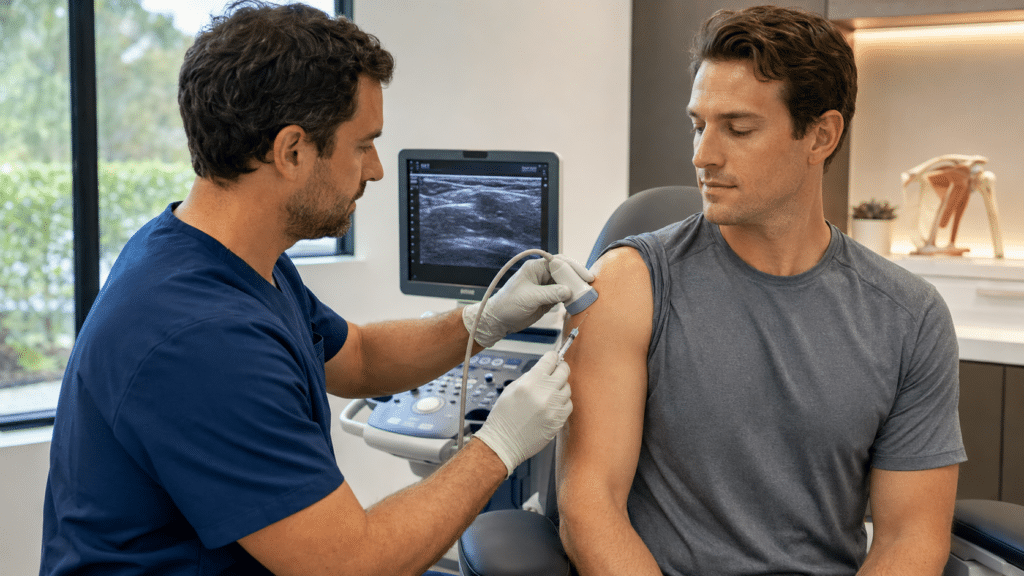
This is one reason sports medicine injections should follow a careful examination and a clear anatomical diagnosis. Depending on the area and condition, imaging guidance may be used to improve placement.
At Thrive Medicine, injections are performed as part of physician-led sports medicine care, with treatment selected based on the patient’s condition and goals.
Can You Exercise After a Steroid Injection?
Patients are often advised to avoid strenuous activity for a short period after an injection, particularly when treatment is near a tendon.
Returning to activity too quickly may aggravate the area or increase the risk of injury. The temporary reduction in pain can also make an athlete feel ready before the underlying tissue is prepared for full stress.
Your physician may recommend:
- Relative rest for several days
- Avoiding heavy lifting or high-impact activity
- Gradual return to exercise
- Resuming rehabilitation before competition
- Monitoring for increased pain or swelling
Return-to-play recommendations should be based on the condition treated, the injection location, and the demands of the sport.
Steroid Injections vs. PRP
Steroid injections and platelet-rich plasma injections have different goals.
Steroid injections primarily reduce inflammation and may provide relatively fast symptom relief.
PRP sports injections use concentrated platelets from the patient’s own blood and are intended to support the body’s healing response. PRP improvement is generally more gradual.
In simple terms:
- Steroid injections may be considered for short-term control of inflammation.
- PRP may be considered for certain degenerative tendon, ligament, or joint conditions.
- Neither option is appropriate for every injury.
- Accurate diagnosis should determine the treatment—not simply which injection a patient prefers.
In some situations, prolotherapy may also be considered when joint stability or ligament-related pain is a concern.
When Should You See a Sports Medicine Physician?
Consider scheduling an evaluation when:
- Pain has lasted more than a few weeks
- An injury repeatedly returns
- Swelling limits movement
- You cannot participate in normal activity
- Home treatment has not been effective
- You are unsure whether the problem is inflammatory or structural
- You are considering an injection
- You need guidance on safely returning to sports
A physician can evaluate the affected area, determine whether imaging is necessary, and explain the benefits and limitations of available treatments.
Frequently Asked Questions About Steroid Injections for Sports Injuries
Are cortisone shots safe for tendonitis?
They may be appropriate for selected conditions involving inflammation around a tendon or within a tendon sheath. Steroid should generally not be injected directly into tendon tissue because it may weaken the tendon and increase the risk of tearing.
How long do steroid injections last?
Relief may last from several weeks to several months, but results vary. Some patients receive limited or no benefit.
How many steroid injections can you have?
There is no single limit that applies to every body part and patient. Physicians generally use repeated injections cautiously because frequency can affect tendons, cartilage, skin, and surrounding tissues.
Can a cortisone shot heal a sports injury?
Cortisone primarily reduces inflammation and pain. It does not directly repair a torn ligament, rebuild cartilage, or heal a ruptured tendon.
Are steroid injections painful?
Patients may feel pressure or brief discomfort during the injection. Temporary soreness may occur afterward.
Can steroid injections make an injury worse?
An injection may carry risks, particularly when placed directly into a tendon or repeated too frequently. Pain relief can also encourage a patient to return to activity before the injured area is ready.
Do steroid injections work for bursitis?
They may be effective when pain is caused by an inflamed bursa and other appropriate treatments have not provided enough relief. Infection and other causes of symptoms should be ruled out first.
Are steroid injections effective for shoulder impingement?
They may provide short-term relief for selected cases of rotator cuff-related shoulder pain or subacromial bursitis. Long-term recovery usually still requires exercise, strengthening, and management of contributing factors.
Sports Medicine Injections in Northville, MI
If pain or inflammation is limiting your ability to work, exercise, or participate in sports, a targeted injection may be one part of your treatment plan.
At Thrive Medicine in Northville, Michigan, Dr. Jasbir Singh provides physician-led sports medicine assessments and injection-based treatment options for patients from Northville, Novi, Plymouth, and surrounding communities.
We will evaluate the source of your symptoms and explain whether a steroid injection, PRP, prolotherapy, rehabilitation, or another treatment may be appropriate.
Call 248-880-3319 or contact Thrive Medicine to schedule a sports medicine consultation.
Medical Disclaimer: The information provided in this article is for general educational and informational purposes only and is not intended as, and should not be considered, medical advice, diagnosis, or treatment. Reading this content does not establish a patient-provider relationship with Thrive Medicine or any of its healthcare professionals. Always consult a qualified healthcare provider regarding your individual health, symptoms, medical conditions, or treatment options. Do not disregard or delay seeking professional medical advice because of information you have read on this website. If you believe you are experiencing a medical emergency, seek immediate medical attention or call 911. Individual results and treatment recommendations may vary.
