
Can PRP Treatments Help You Avoid Surgery?
Knee pain can make it difficult to stay active, exercise comfortably, or even complete daily activities without discomfort. Whether you’re dealing with knee arthritis, a sports injury, tendonitis, or chronic inflammation, you may be wondering whether surgery is your only option.
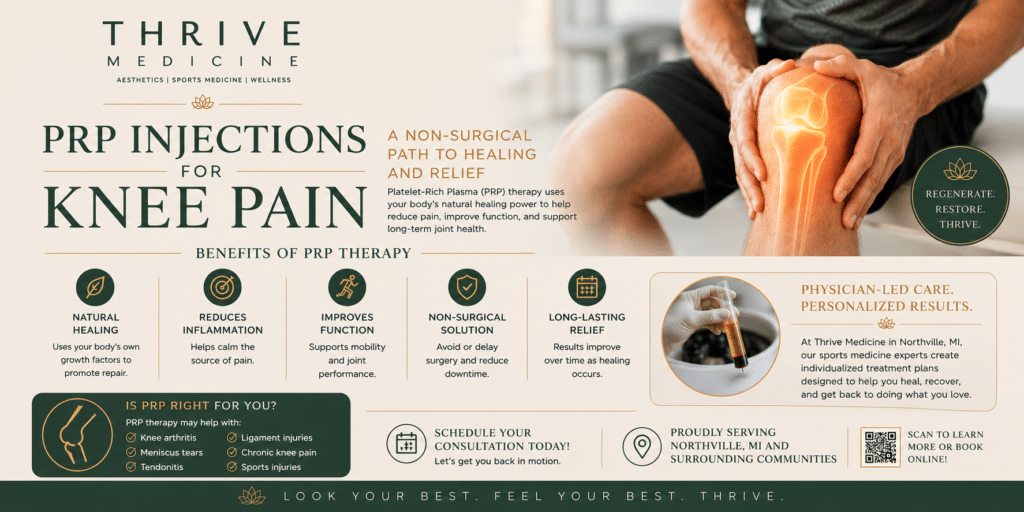
Many patients in Northville are now exploring PRP injections for knee pain as a non-surgical treatment designed to help reduce pain, improve mobility, and support the body’s natural healing process.
At Thrive Medicine in Northville, MI, we offer physician-led PRP therapy and regenerative medicine treatments tailored to each patient’s condition, activity level, and long-term goals.
What Are PRP Injections?
PRP stands for Platelet-Rich Plasma. PRP therapy uses a small sample of your own blood, which is processed to separate and concentrate platelets and growth factors that may help support tissue repair and healing.
Once prepared, the platelet-rich plasma is injected directly into the injured or painful area of the knee.
Because PRP uses your body’s own cells and growth factors, it is considered a minimally invasive and natural treatment option for certain orthopedic and sports medicine conditions.
PRP injections are commonly used to treat:
- Knee pain
- Sports injuries
- Tendonitis
- Ligament injuries
- Arthritis-related inflammation
- Chronic overuse injuries
- Joint pain
Unlike treatments that focus only on temporarily reducing pain, PRP therapy is designed to support the body’s healing response at the source of the problem.
What Causes Chronic Knee Pain?
Knee pain can develop for many different reasons. Some patients experience a sudden injury during sports or exercise, while others develop chronic pain gradually over time.
Common causes of knee pain include:
- Knee osteoarthritis
- Meniscus irritation or degeneration
- Patellar tendonitis
- Ligament strains
- Runner’s knee
- Chronic inflammation
- Sports-related injuries
- Cartilage wear and tear
- Overuse injuries
Because the knee is one of the body’s most heavily used joints, even mild damage or inflammation can significantly impact mobility and comfort.
At Thrive Medicine, every patient receives an individualized evaluation to determine the underlying cause of their symptoms and whether PRP injections may be an appropriate treatment option.
How PRP Injections Work for Knee Pain
PRP injections work by delivering a concentrated solution of platelets and growth factors directly into the affected tissue.
Platelets naturally contain proteins and signaling molecules that play an important role in the body’s healing process. By concentrating these platelets and injecting them into damaged or inflamed areas, PRP therapy may help:
- Support tissue healing
- Reduce inflammation
- Improve joint function
- Promote recovery from chronic injuries
- Decrease pain over time
PRP injections are commonly used in sports medicine because they offer a non-surgical treatment option for patients looking to stay active and improve recovery naturally.
PRP Injections for Knee Arthritis
One of the most common reasons patients seek PRP injections is knee arthritis.
Knee osteoarthritis occurs when the protective cartilage in the joint gradually wears down over time. This can lead to:
- Pain
- Swelling
- Stiffness
- Reduced mobility
- Difficulty walking or exercising
Many patients with arthritis initially try treatments such as:
- Rest
- Physical therapy
- Anti-inflammatory medications
- Cortisone injections
While these treatments may provide temporary relief, some patients continue experiencing chronic symptoms or want to avoid repeated steroid injections.
PRP therapy may be beneficial for patients with mild to moderate knee arthritis who are looking for a non-surgical approach to managing discomfort and maintaining activity levels.
PRP vs Steroid Injections for Knee Pain
Patients frequently compare PRP injections to cortisone or steroid injections when researching treatment options for knee pain.
Steroid injections primarily work by reducing inflammation and temporarily relieving pain. While they can be effective in certain situations, the relief is often temporary and may not address the underlying tissue damage or degeneration.
PRP injections take a different approach.
Instead of simply masking symptoms, PRP therapy focuses on supporting the body’s healing response through concentrated platelets and growth factors.
For some patients, PRP may offer longer-lasting improvement compared to repeated steroid injections, particularly for chronic tendon injuries or mild to moderate arthritis.
Patients interested in learning more about regenerative medicine options can also read our guide comparing PRP vs prolotherapy vs steroid injections for pain relief and healing.
Why the Quality of PRP Matters
Not all PRP injections are the same.
The quality of the PRP preparation process, platelet concentration, and injection technique can all influence the overall treatment experience.
At Thrive Medicine in Northville, PRP injections are performed by a physician with sports medicine experience and training in regenerative medicine treatments.
Our approach focuses on:
- Personalized treatment plans
- Careful patient evaluation
- Precision injection techniques
- High-quality PRP preparation systems
- Conservative, patient-focused care
Many patients appreciate working with a physician-led practice that takes the time to explain treatment options thoroughly and answer questions before proceeding.
Why PRP Results Can Vary Between Providers
Many patients are surprised to learn that PRP treatment results can vary significantly between providers.
Several factors may influence the effectiveness of PRP injections, including:
- The quality of the PRP preparation process
- Platelet concentration levels
- Injection technique
- The accuracy of the diagnosis
- The severity of the condition being treated
- Overall patient health and activity level
- Provider experience with regenerative medicine treatments
Not all PRP systems and protocols are identical. A personalized evaluation and properly performed injection technique can play an important role in developing an effective treatment plan.
At Thrive Medicine, we focus on physician-led care, individualized treatment planning, and patient education to help patients better understand their options and expectations before treatment.
What to Expect During PRP Treatment
The PRP injection process is relatively straightforward and typically performed in-office.
The treatment generally includes:
Consultation and Evaluation
Your visit begins with a discussion about your symptoms, medical history, activity level, and treatment goals.
Blood Draw
A small sample of blood is collected from your arm.
PRP Preparation
The blood is processed using specialized equipment to concentrate the platelets and growth factors.
Injection
The PRP is injected into the affected area of the knee.
The entire process is typically completed during a single appointment.
Recovery After PRP Knee Injections
Recovery after PRP injections is generally manageable for most patients.
Some temporary soreness, swelling, or stiffness may occur for a few days following treatment, which is a normal part of the healing response.
Most patients can return to light daily activities relatively quickly, although activity modification recommendations may vary depending on the severity of the condition being treated.
Improvement is often gradual, with many patients noticing changes over the course of several weeks as the healing process develops.
Can PRP Help You Avoid Knee Surgery?
PRP injections are not a replacement for surgery in every case. However, some patients with chronic knee pain or mild to moderate arthritis may benefit from exploring non-surgical treatment options before considering more invasive procedures.
Patients often seek PRP therapy because they want to:
- Stay active
- Delay surgery
- Avoid prolonged recovery times
- Reduce chronic pain
- Improve mobility naturally
- Continue participating in sports or exercise
A thorough evaluation can help determine whether PRP may be appropriate based on your condition, symptoms, and treatment goals.
Who May Be a Good Candidate for PRP Knee Injections?
PRP therapy may be appropriate for patients who:
- Have chronic knee pain
- Experience mild to moderate arthritis
- Have tendon or ligament injuries
- Want to avoid surgery if possible
- Are looking for non-surgical treatment options
- Have not achieved lasting relief with conservative treatments
Because every patient is different, a consultation is the best way to determine whether PRP injections may be beneficial for your situation.
Conditions Commonly Treated With PRP Knee Injections
Then include:
- knee osteoarthritis
- patellar tendonitis
- runner’s knee
- meniscus irritation
- ligament injuries
- chronic inflammation
Why Choose Thrive Medicine for PRP Knee Injections?
Choosing the right provider for PRP knee injections is an important part of the treatment process. While many clinics may offer regenerative medicine treatments, experience, evaluation methods, and injection technique can all influence the overall patient experience and results.
At Thrive Medicine in Northville, MI, PRP injections are performed as part of a physician-led sports medicine and regenerative medicine approach focused on personalized care and long-term function.
Our approach emphasizes:
- Comprehensive patient evaluations
- Individualized treatment planning
- Conservative, patient-focused care
- Sports medicine expertise
- Precision injection techniques
- High-quality PRP preparation systems
- Natural, functional recovery goals
We believe patients should fully understand their treatment options and feel comfortable asking questions throughout the process. Every treatment plan is customized based on the patient’s symptoms, activity level, medical history, and long-term goals.
Frequently Asked Questions About PRP Knee Injections
How long do PRP injections last in the knee?
Results from PRP knee injections vary depending on the severity of the condition, activity level, and overall joint health. Many patients experience improvement for several months, while others may benefit from ongoing treatment plans or additional therapies.
Are PRP injections painful?
Most patients tolerate PRP injections well. Some temporary soreness, swelling, or stiffness may occur after treatment, which is a normal part of the body’s healing response.
How many PRP injections do you need for knee pain?
The number of PRP injections needed depends on the patient’s condition, symptoms, and treatment goals. Some patients improve after one treatment, while others may benefit from a series of injections over time.
Is PRP better than cortisone injections?
PRP and cortisone injections work differently. Cortisone injections primarily focus on temporarily reducing inflammation, while PRP therapy is designed to support the body’s natural healing response using concentrated platelets and growth factors.
Does insurance cover PRP injections?
PRP injections are often considered elective regenerative medicine treatments and may not be covered by insurance. Patients can discuss treatment costs and options during their consultation.
How long does it take for PRP injections to work?
Some patients begin noticing improvement within several weeks after treatment, although results may continue developing over time as healing progresses.
Who is a good candidate for PRP knee injections?
PRP therapy may be appropriate for patients with chronic knee pain, mild to moderate arthritis, tendon injuries, sports injuries, or patients looking for non-surgical treatment options.
Can PRP help you avoid knee surgery?
While PRP injections are not a replacement for surgery in every case, some patients may benefit from exploring non-surgical treatment options before considering more invasive procedures.
PRP Injections for Knee Pain in Northville, MI
At Thrive Medicine, we believe patients deserve a personalized and transparent approach to sports medicine care. Our goal is to help patients better understand their treatment options while developing individualized plans focused on long-term function, mobility, and quality of life.
If you are looking for PRP injections for knee pain in Northville, MI, our team is here to help you explore whether regenerative medicine treatments may be appropriate for your condition.
Contact Thrive Medicine today to schedule a consultation and learn more about non-surgical treatment options for chronic knee pain and sports injuries.
Medical Disclaimer: The information provided in this article is for general educational and informational purposes only and is not intended as, and should not be considered, medical advice, diagnosis, or treatment. Reading this content does not establish a patient-provider relationship with Thrive Medicine or any of its healthcare professionals. Always consult a qualified healthcare provider regarding your individual health, symptoms, medical conditions, or treatment options. Do not disregard or delay seeking professional medical advice because of information you have read on this website. If you believe you are experiencing a medical emergency, seek immediate medical attention or call 911. Individual results and treatment recommendations may vary.
