
Prolotherapy in Michigan
Thrive Medicine provides physician-led prolotherapy in Michigan for patients exploring nonsurgical treatment for persistent joint pain, ligament injuries, tendon problems and musculoskeletal instability. Our Northville office welcomes patients from throughout Southeast Michigan and beyond.
What Is Prolotherapy?
Prolotherapy is an injection-based treatment used for selected ligament, tendon and joint conditions. It commonly involves injecting a solution containing dextrose into carefully selected areas around the affected tissue.
The solution is intended to produce a controlled local response that may support the body’s natural healing processes. Depending on the condition, treatment may be used with the goal of improving pain, function or support around an injured joint.
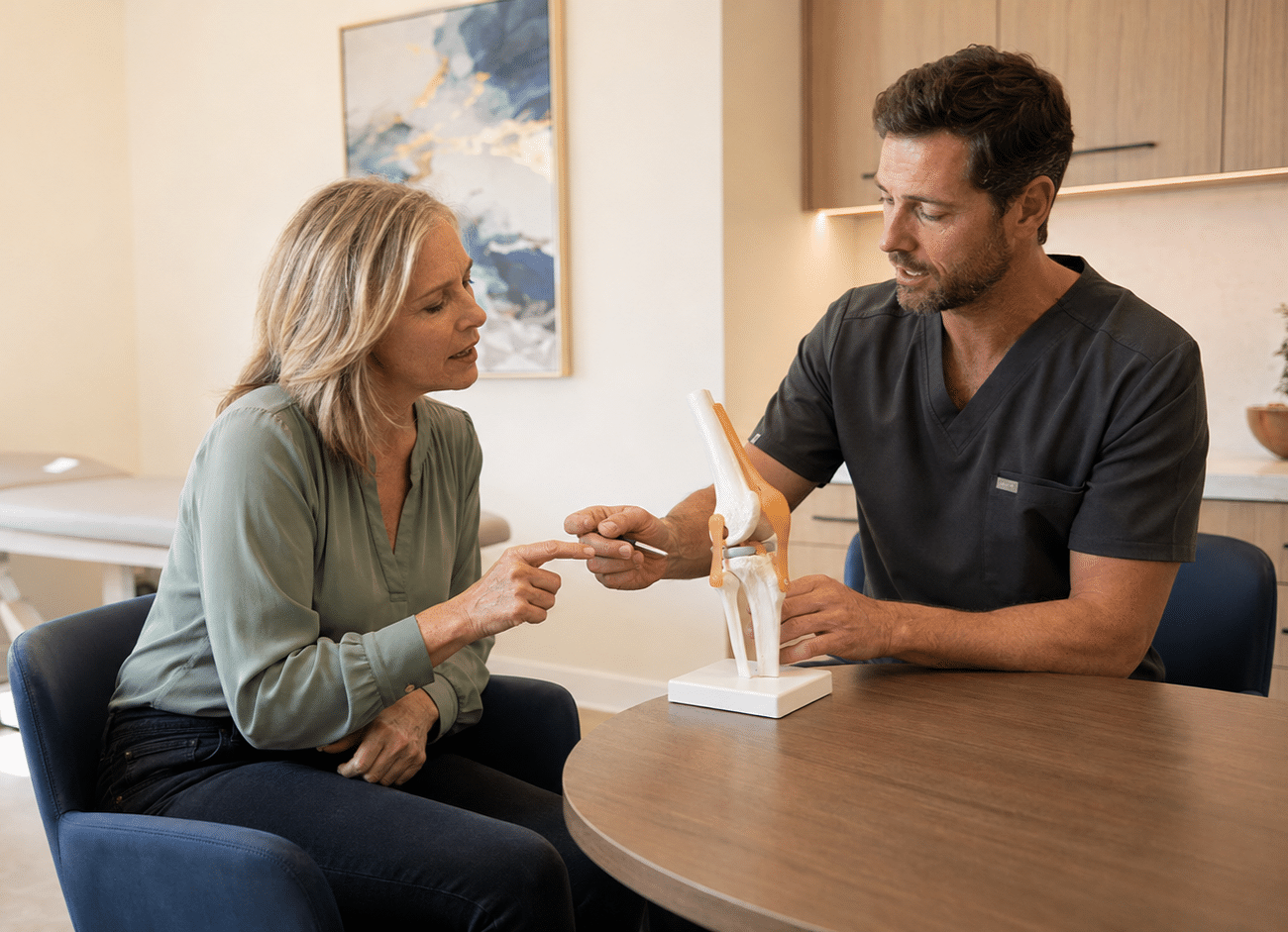
Prolotherapy is not appropriate for every injury. At Thrive Medicine, treatment begins with a sports medicine evaluation to identify the likely source of your symptoms and determine whether prolotherapy is a reasonable option.
Why Do Michigan Patients Consider Prolotherapy?
- Persistent pain that has not improved with initial care
- Recurring tendon or ligament problems
- Repeated sprains or a feeling of joint instability
- Interest in nonsurgical treatment options
- A desire for physician-led regenerative care
- Limited access to prolotherapy providers nearby
- A need for another opinion about an ongoing injury
- A goal of returning to sports or physical activity
Is Prolotherapy Worth Traveling for?
Specialized Treatment
Prolotherapy is not available at every primary care, orthopedic or sports medicine practice. Some patients travel beyond their immediate community to find a physician who offers it.
Diagnosis Comes First
The success of any injection plan depends on identifying the structure responsible for the symptoms. Thrive Medicine emphasizes evaluation and diagnosis before recommending treatment.
Multiple Treatment Options
Thrive Medicine offers prolotherapy, PRP and steroid injections, allowing Dr. Singh to discuss different approaches instead of treating every condition with the same procedure.
Conditions Prolotherapy May Be Used to Treat
Prolotherapy may be considered for selected musculoskeletal problems involving painful, irritated or weakened connective tissues. Its appropriateness depends on the diagnosis, injury severity, medical history and previous response to treatment.
Common Treatment Areas
- Knees
- Hips
- Shoulders
- Elbows
- Wrists and hands
- Ankles and feet
Treatment recommendations vary. An in-person evaluation is necessary before prolotherapy can be recommended.
Why Physician-Led Prolotherapy Matters
Joint pain does not always originate from the joint itself. Similar symptoms can be caused by arthritis, tendon injuries, ligament damage, bursitis, nerve irritation, muscle problems or pain referred from another part of the body.
Dr. Jasbir Singh is board certified in both Family Medicine and Sports Medicine. This training allows the prolotherapy process to begin with a broader medical and musculoskeletal evaluation.
If prolotherapy is not the right treatment, Dr. Singh can discuss other options or recommend additional imaging or referral when appropriate.
What Prolotherapy Cannot Do
Prolotherapy should not be presented as a guaranteed cure or as a replacement for every type of orthopedic treatment. It cannot mechanically reconnect a completely ruptured tendon, stabilize a fracture or reverse advanced structural damage.
Some injuries require surgery, rehabilitation, medication or another form of medical care. Treatment results also vary, and improvement may be gradual rather than immediate.
Thrive Medicine provides an honest discussion of potential benefits, limitations, alternatives and realistic expectations before treatment.
What to Expect When Visiting Thrive Medicine
Sports Medicine Evaluation
Your appointment begins with a review of your symptoms, medical history, previous injuries, activity demands and treatments already attempted. The affected area is then examined.
Personalized Recommendation
Dr. Singh will explain the likely cause of your symptoms and whether prolotherapy, PRP, a steroid injection or another approach may be appropriate. Additional testing may be recommended when needed.
Treatment and Follow-Up
If prolotherapy is selected, injections are directed toward the targeted tissues. You will receive individualized aftercare, activity and follow-up recommendations.
Recovery After Prolotherapy
Temporary soreness, stiffness or irritation can occur following treatment. The experience varies according to the treatment area, number of injections and individual response.
Because prolotherapy is intended to create a controlled response, improvement is not necessarily immediate. If treatment helps, changes may develop gradually over time.
Follow the instructions provided by your physician concerning physical activity, medication use and return to exercise. Contact the office if you experience symptoms that are unexpected or concerning.
How Many Treatments Are Needed?
There is no single treatment schedule that is appropriate for every patient. The number of sessions depends on the diagnosis, severity, treatment area, goals and response.
Some patients may be evaluated for a series of sessions spaced over time. Others may need a different treatment if the expected progress does not occur.
Your treatment plan will be reviewed throughout the process rather than assuming that additional injections are always necessary.
Prolotherapy vs. PRP: Which Is Right for You?
Prolotherapy and platelet-rich plasma therapy are both injection-based treatments, but they use different preparations. Prolotherapy commonly uses a dextrose-based solution, while PRP is prepared from a concentrated portion of the patient’s own blood.
The best option depends on the condition being treated, the tissue involved, previous treatments and your goals. Neither procedure is automatically better for every injury, and some patients may not be candidates for either treatment.
Learn more about PRP sports injections in Michigan or read our guide comparing PRP, prolotherapy and steroid injections .
Serving Prolotherapy Patients Across Southeast Michigan
Thrive Medicine is located at 215 E Main Street, Suite 202, in downtown Northville. Our location is accessible to patients traveling from communities throughout Southeast Michigan.
We do not claim to have offices throughout the state. All in-person evaluations and treatments are provided at our Northville location.
Patients closer to Novi can also learn more about prolotherapy near Novi, MI .
Planning Your Visit From Outside Northville
If you are traveling from another part of Michigan, contact Thrive Medicine before your appointment to ask what medical records, imaging reports or treatment information may be helpful to bring.
Information about previous diagnoses, injections, surgeries and rehabilitation can help Dr. Singh understand what has already been attempted.
Depending on your condition, an evaluation may be required before deciding whether treatment should be performed.
Transparent Self-Pay Care
Thrive Medicine operates as a self-pay practice. This allows for direct access to individualized sports medicine care without requiring an insurance referral.
Prolotherapy is not routinely covered by many insurance plans. Eligible medical expenses may be payable with HSA or FSA funds, but patients should confirm eligibility with their account administrator.
Pricing and the proposed treatment plan will be discussed before proceeding.
Frequently Asked Questions About Prolotherapy in Michigan
Where can I get prolotherapy in Michigan?
Who performs prolotherapy at Thrive Medicine?
What does prolotherapy treat?
Is prolotherapy the same as PRP?
Does prolotherapy permanently cure joint pain?
Can prolotherapy help me avoid surgery?
How long does prolotherapy take to work?
Is prolotherapy covered by insurance?
Do I need a referral?
Schedule a Prolotherapy Consultation in Michigan
If persistent joint, tendon or ligament pain is limiting your activities, schedule an evaluation at Thrive Medicine in Northville. Dr. Singh can help identify the source of your symptoms and determine whether prolotherapy or another nonsurgical treatment may be appropriate.
